
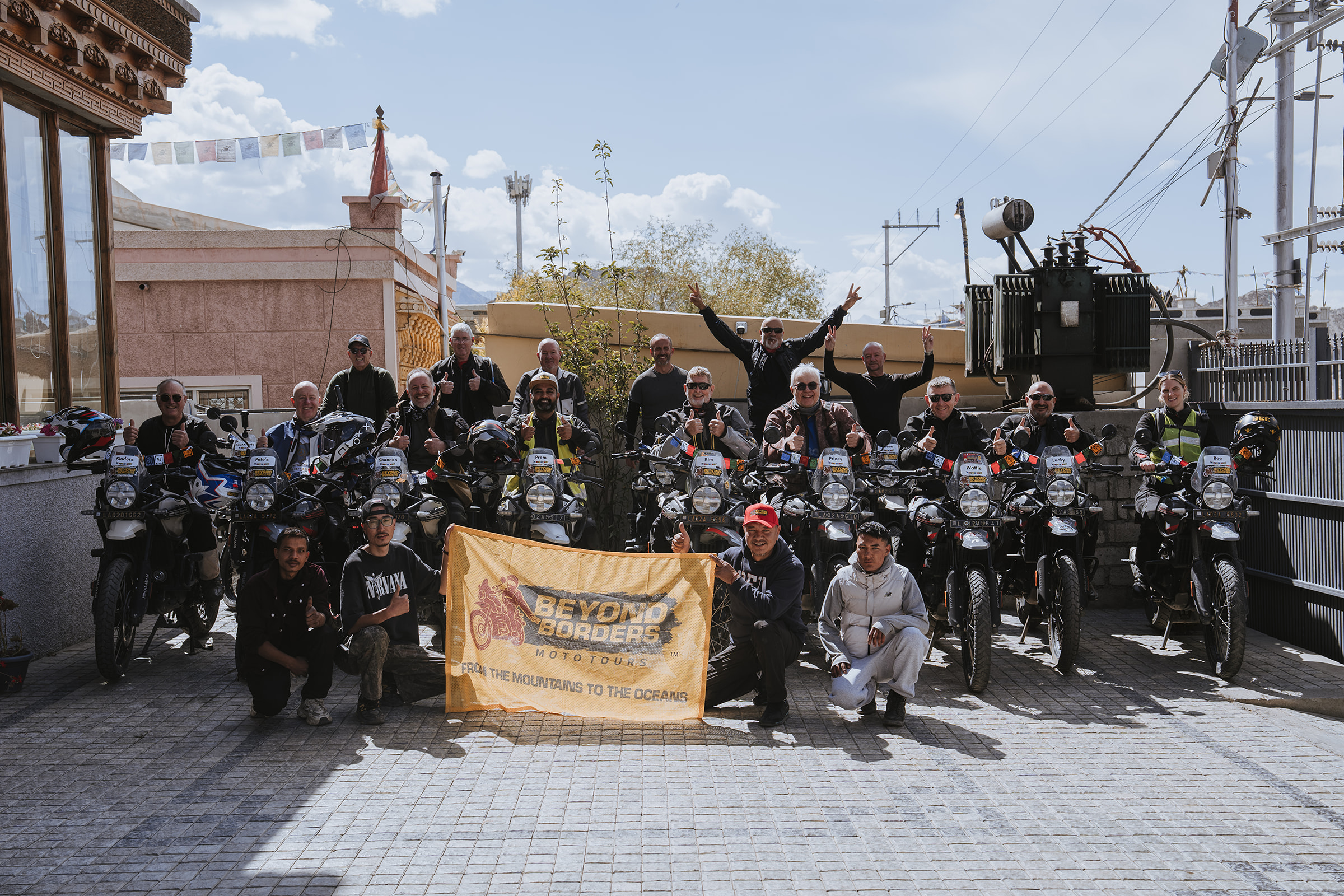
Riding through the Himalayas is one of the most extraordinary adventures a motorcyclist can experience. But before booking your dream journey, there are some important things worth understanding — from riding conditions and motorcycle selection to altitude, safety, accommodation and choosing the right tour operator.
There’s something about the Himalayas that captures a motorcyclist’s imagination. Perhaps it’s the thought of riding through towering mountain ranges, crossing high-altitude passes, exploring remote villages or experiencing cultures shaped by centuries of mountain life.
Whether you’re considering the dramatic landscapes of Ladakh in northern India or the ancient Himalayan region of Upper Mustang in Nepal, these destinations offer riding experiences unlike almost anywhere else.
However, Himalayan motorcycle touring is very different from riding through Australia or New Zealand. Distances can be deceptive, road conditions change frequently, altitude introduces additional challenges, and facilities become increasingly limited in remote regions.
Having organised and led motorcycle expeditions through these regions, we’ve learned that a memorable Himalayan adventure begins with choosing the right tour, understanding what you’re signing up for and preparing appropriately.
Here are 12 important considerations before booking.
1. Understand the Route — Not Just the Destination
Two tours advertised as Himalayan motorcycle adventures can offer completely different riding experiences, even when visiting the same region.
A Ladakh motorcycle tour might involve predominantly sealed mountain roads, with occasional gravel, broken tarmac and water crossings. Other itineraries venture into Zanskar or remote valleys where the terrain becomes considerably more technical.
Upper Mustang presents different challenges, with rocky tracks, dusty mountain roads, steep gradients and remote settlements. Road conditions vary as infrastructure continues to develop.
Before booking, understand the proportion of sealed versus unsealed roads, the technical difficulty and the daily riding distances.
One important lesson from the Himalayas is that distance doesn’t always translate into riding time. A 150-kilometre journey that takes a couple of hours in Australia could occupy most of the day in the Himalayas because of road conditions, weather, traffic and mountain terrain.
A well-planned itinerary balances challenging riding with time to appreciate the destination. There’s little point travelling halfway around the world only to rush between hotels.
2. Choose the Right Season for Your Himalayan Adventure
Timing significantly influences the riding experience. The ideal season varies between Himalayan regions because of differences in climate, altitude and road accessibility.
Ladakh, India: June to September
June to September is generally the main motorcycle touring season in Ladakh, when many high-altitude roads become accessible following winter.
June often offers spectacular snow-covered landscapes, although melting snow can create challenging water crossings. July and August are generally warmer, while September frequently brings clearer skies, fewer tourists and colder mornings.
Weather remains unpredictable, and even during peak season, snowfall, landslides and road closures are possible.
Upper Mustang, Nepal: October to May
Upper Mustang has a different seasonal pattern, with October–November and March–May generally offering particularly favourable riding conditions.
October and November often provide clear post-monsoon skies, while March through May brings gradually warming temperatures.
Although the broader travel window extends from October to May, December through February can be extremely cold, with snow and ice potentially affecting routes.
Upper Mustang lies in a Himalayan rain-shadow region, but the approach roads from lower elevations can still experience monsoon-related disruptions.
Choose your tour dates based on regional riding conditions rather than simply annual leave availability.
3. Be Honest About Your Riding Experience
One of the most common questions we receive is, “How much riding experience do I need for the Himalayas?”
Our general recommendation is at least three years of regular motorcycle riding experience before considering a Himalayan expedition.
This isn’t an absolute rule. Someone riding regularly for three years may be more capable than someone who has held a licence for 15 years but rarely rides.
What matters is your confidence handling a motorcycle across different conditions.
Himalayan roads can involve steep gradients, tight hairpin bends, loose gravel, broken surfaces, water crossings and unpredictable traffic.
You don’t necessarily need extensive off-road experience for a predominantly sealed-road Ladakh itinerary. However, routes through Upper Mustang or Zanskar generally demand greater confidence on loose and uneven terrain.
We encourage riders to develop their skills beforehand through adventure-riding courses, gravel-road practice and regular riding.
The objective isn’t simply to finish the expedition. It’s to enjoy the experience and return home with incredible memories for the right reasons.
4. Choose the Right Motorcycle
The motorcycle you’ll be riding deserves as much consideration as the destination itself.
Three important factors are engine capacity, seat height and motorcycle weight.
Engine capacity
A bigger motorcycle doesn’t necessarily provide a better Himalayan riding experience.
While large adventure motorcycles are excellent for touring in Australia, their additional weight can become challenging on rocky tracks, narrow mountain roads and technical sections.
Mid-capacity adventure motorcycles, particularly around 350–500cc, often provide an excellent balance of manageable weight, performance and versatility.
The Royal Enfield Himalayan is a popular choice because of its suitability for varied mountain terrain.
Seat height and weight
Seat height is particularly important for shorter riders or those less confident on uneven surfaces. Being able to place a foot securely on the ground helps when stopping on inclines or manoeuvring at low speeds.
Similarly, a motorcycle that feels manageable on sealed roads may become demanding on loose gravel or steep tracks.
Ask your operator about available motorcycles, seat heights, lower-seat options and alternatives.
The best Himalayan motorcycle isn’t necessarily the biggest or most powerful. It’s the one you can ride confidently throughout the journey.
5. Safety Arrangements and Support Services
Safety arrangements deserve particular attention when comparing Himalayan tour operators.
These regions are remote, and medical facilities, workshops and reliable mobile reception can be several hours away.
A well-organised expedition should have experienced personnel who understand local terrain, weather, road conditions and high-altitude challenges.
Depending on the itinerary, support arrangements may include:
- Experienced tour leader and local road captain
- Sweep rider and mechanic
- Support vehicle for luggage and essential supplies
- Spare parts and mechanical assistance
- First-aid equipment and emergency response procedures
A support vehicle is particularly valuable when a rider becomes fatigued, unwell or temporarily unable to continue.
However, don’t simply accept that a tour includes a support vehicle. Ask how the support system operates.
What happens if a motorcycle breaks down? How are medical emergencies managed? What communication arrangements exist when mobile reception disappears?
A good support team doesn’t remove the adventure. It allows riders to experience it with greater confidence.
6. Altitude, Health and Acclimatisation
Altitude is one of the most important considerations when planning a Himalayan motorcycle expedition.
Leh sits at approximately 3,500 metres above sea level, with many riding routes climbing considerably higher.
At these elevations, reduced oxygen availability affects the body, and altitude sickness can occur regardless of age or fitness.
Symptoms may include headaches, nausea, dizziness, fatigue and disturbed sleep. Serious altitude-related conditions can become life-threatening.
Importantly, physical fitness does not prevent altitude sickness.
Allow sufficient time to acclimatise
Visitors arriving in Leh are required to allow at least 48 hours for acclimatisation before travelling to higher-altitude destinations.
This time should involve rest, gentle activity and avoiding alcohol or strenuous exercise.
As the journey progresses, the itinerary should manage altitude gains sensibly, particularly sleeping elevations.
Riders should never attempt to push through worsening altitude sickness symptoms simply to complete an itinerary. Medical assessment and descent may be necessary.
Before departure, discuss high-altitude travel with a suitably qualified doctor, especially if you have an existing medical condition.
A responsible itinerary prioritises acclimatisation over squeezing additional destinations into the schedule.
7. Physical Fitness Makes the Journey More Enjoyable
You don’t need to be an athlete to ride through the Himalayas, but reasonable physical fitness makes a significant difference.
Long riding days, standing on the footpegs, navigating rough terrain and maintaining concentration can be physically demanding.
Fatigue also affects judgement and riding performance.
In the weeks before departure, regular walking, cycling, swimming, strength training and motorcycle riding can help improve endurance.
Core strength, flexibility and mobility are particularly useful when handling motorcycles on uneven surfaces.
Some itineraries also include hiking to monasteries or exploring villages on foot, making general fitness valuable beyond the riding itself.
The objective is to have sufficient stamina to enjoy the riding, sightseeing and evenings without feeling completely exhausted every day.
Remember that fitness and acclimatisation are separate considerations.
8. Compare Tour Packages Beyond the Price
Two Himalayan motorcycle tours may advertise similar destinations but provide very different experiences.
A lower advertised price doesn’t necessarily represent better value.
Some operators include motorcycle hire but charge separately for fuel. Others exclude meals, permits, airport transfers or essential support services.
Before comparing prices, understand exactly what’s included.
Important questions include:
- Motorcycle: What model is supplied? Is fuel included? What are the damage liabilities?
- Accommodation: What standards are provided? Is the price twin-share, and what is the single supplement?
- Meals: Are breakfast, lunch and dinner included?
- Support: Are a tour leader, sweep rider, mechanic and support vehicle included?
- Permits: Are restricted-area permits and entrance fees covered?
- Itinerary: How many actual riding days are included? Are rest and acclimatisation days provided?
- Additional costs: What expenses, upgrades and cancellation conditions should you expect?
For Upper Mustang, confirm whether the restricted-area permits are included, as these can represent a significant expense.
Also understand whether the company operates tours directly or works with an established local ground team.
The value of a motorcycle expedition isn’t determined by the lowest advertised price, but by the quality, inclusions and support provided.
9. Accommodation: Set Realistic Expectations
Accommodation varies considerably across the Himalayas.
In larger centres such as Leh or Pokhara, comfortable hotels and modern facilities are readily available.
However, in remote regions such as Upper Mustang, Hanle or Zanskar, options become more limited.
Depending on the itinerary, accommodation may include boutique hotels, guesthouses, traditional homestays or mountain lodges.
Some properties offer excellent facilities, while others may have basic bathrooms, limited hot water or restricted electricity.
This doesn’t necessarily diminish the experience.
Staying in locally operated accommodation can provide opportunities to interact with families, enjoy traditional food and experience authentic Himalayan hospitality.
However, you should know what to expect.
Ask about room-sharing arrangements, bathroom facilities, heating and whether accommodation standards change throughout the itinerary.
A good operator should be transparent about where comfort may give way to remoteness and cultural authenticity.
10. Travel Insurance, Licensing and Permits
International motorcycle travel requires appropriate documentation and insurance.
Not every travel insurance policy automatically covers riding motorcycles overseas.
Some policies exclude particular engine capacities, off-road riding, high-altitude activities or riding without the appropriate licence.
Before purchasing insurance, confirm coverage for:
- Motorcycle capacity and riding activities
- On-road and off-road conditions
- Maximum altitude reached
- Medical treatment and emergency evacuation
Australian riders should also check whether an International Driving Permit (IDP) is required alongside their Australian motorcycle licence.
Certain areas of Ladakh and Upper Mustang have restricted-access permit requirements, which can change.
Confirm what your tour operator arranges and what remains your responsibility.
It’s also sensible to review current government travel advice before departure.
11. Experience the Culture, Not Just the Roads
The Himalayas offer much more than extraordinary riding.
Both Ladakh and Upper Mustang have rich cultural traditions shaped by geography, religion and centuries of mountain life.
In Ladakh, Buddhist monasteries, prayer flags, traditional villages and regional cuisine form an important part of the experience.
Upper Mustang offers fascinating Tibetan-influenced culture, ancient settlements, monasteries and the historic walled town of Lo Manthang.
Some of our favourite expedition memories have little to do with motorcycles. They’re conversations with locals, sharing traditional meals, visiting monasteries or exploring remote villages.
When comparing itineraries, look for opportunities to engage with local communities rather than simply riding through them.
The best motorcycle adventures balance the excitement of riding with meaningful cultural experiences.
12. Choose an Operator You Trust
Finally, remember that you’re not simply booking a motorcycle and hotel rooms.
You’re trusting the people organising and leading your journey through unfamiliar and sometimes challenging environments.
Take time to read independent reviews, examine photographs from completed tours and understand the operator’s experience in the destination.
Ask about group sizes, tour leaders, local support teams, emergency arrangements and how unexpected changes are handled.
A reliable operator should openly discuss the challenges of the journey, not just the highlights.
If an itinerary appears ambitious, ask how the daily distances were calculated. If accommodation is described as luxurious throughout remote regions, ask which properties are used.
You should feel comfortable asking questions before committing.
A good conversation with the tour organiser can often reveal more about the experience than an entire brochure.
Final Thoughts: Preparation Is Part of the Adventure
Riding through the Himalayas is an experience that stays with you long after the journey ends.
There’s something unforgettable about crossing a high-altitude pass, riding through remote valleys or sharing a meal with fellow riders after a challenging day.
But the experiences that appear effortless in photographs are often the result of considerable planning and preparation.
Choosing the right season, understanding the terrain, assessing your riding ability, selecting an appropriate motorcycle and allowing time to acclimatise are essential to making the journey enjoyable.
Equally important is choosing an operator who understands the destination, provides appropriate support and is transparent about the experience.
At Beyond Borders Moto Tours, organising and leading Himalayan expeditions has reinforced one important lesson: the best adventures aren’t necessarily those with the most kilometres, highest passes or toughest roads.
They’re the journeys where riders feel appropriately challenged, well supported and free to experience everything the destination has to offer.
Because the Himalayas deserve more than simply being ticked off a bucket list. They deserve to be experienced properly.
Experience More.